


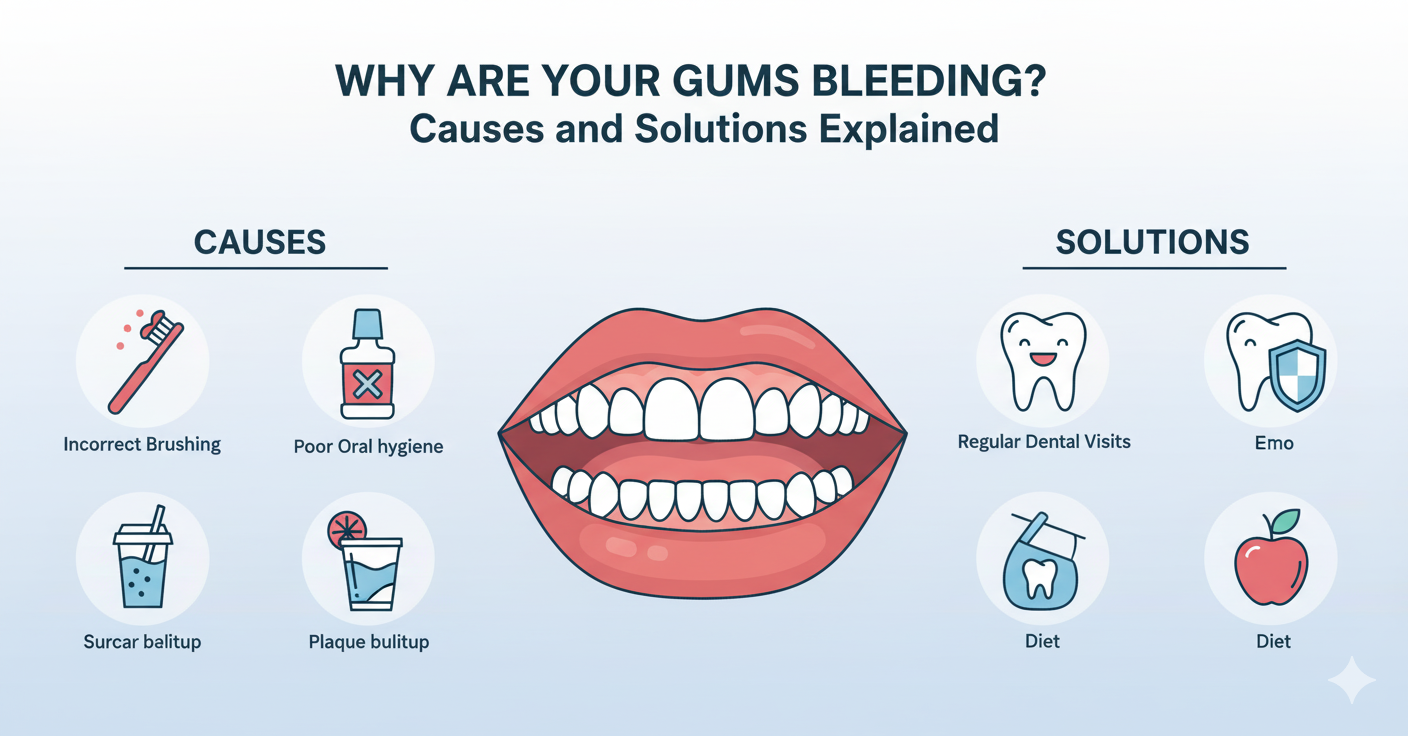
Seeing a tinge of pink in the sink after you brush or floss can be unsettling. Many people notice it from time to time and simply brush it off as a minor issue. Maybe you think you just brushed too hard. While that can sometimes be the case, bleeding gums are often your body’s way of sending a signal that something needs your attention. It’s a common sign, but not one you should ignore.
Understanding why your gums are bleeding is the first step toward addressing the problem and protecting your oral health. This post will explore the common causes of bleeding gums, what it could mean for your overall health, and the practical steps you can take to get your gums back in shape.
What Causes Gums to Bleed?
Bleeding gums are most often a symptom of gum disease, but other factors can contribute. Identifying the root cause is crucial for effective treatment.
Gingivitis: The Early Warning Sign
The most common culprit behind bleeding gums is gingivitis. This is the earliest and mildest form of gum disease. It happens when plaque, a sticky film of bacteria, builds up along your gumline. If this plaque isn’t removed through daily brushing and flossing, it can irritate your gums, causing them to become inflamed, swollen, and prone to bleeding.
The good news is that gingivitis is completely reversible. With a consistent oral hygiene routine and professional cleanings, you can restore your gums to full health. However, if left untreated, it can advance to a more serious condition.
Periodontitis: Advanced Gum Disease
When gingivitis is ignored, it can progress to periodontitis. In this advanced stage of gum disease, the inflammation spreads below the gumline. The inner layer of the gum and bone pulls away from the teeth, forming pockets. These small spaces collect debris and can become infected.
As your body’s immune system fights the bacteria, the plaque spreads and grows below the gumline. This process, along with the toxins produced by the bacteria, starts to break down the bone and connective tissue that hold your teeth in place. If not treated, the teeth can become loose and may eventually need to be removed. Bleeding gums are a key symptom of periodontitis, often accompanied by persistent bad breath, receding gums, and changes in your bite.
Other Contributing Factors
While gum disease is the primary cause, other issues can lead to bleeding gums:
- Brushing Too Hard: Using a hard-bristled toothbrush or applying too much pressure can damage your delicate gum tissue and cause bleeding.
- New Flossing Routine: If you’ve just started flossing regularly, you might experience some minor bleeding for the first week as your gums adjust.
- Medications: Certain medications, especially blood thinners, can increase your likelihood of bleeding.
- Pregnancy: Hormonal changes during pregnancy can make your gums more sensitive and susceptible to inflammation, a condition known as “pregnancy gingivitis.”
- Nutritional Deficiencies: A lack of certain vitamins, particularly Vitamin C and Vitamin K, can contribute to bleeding gums.
What to Do When Your Gums Bleed
Noticing bleeding gums should prompt action, not panic. Here are the immediate steps you can take to address the issue and improve your gum health.
1. Re-evaluate Your Oral Hygiene Routine
Your first line of defense is a solid daily care routine. Make sure you are:
- Brushing Twice a Day: Use a soft-bristled toothbrush and a fluoride toothpaste. Angle the brush at 45 degrees toward the gumline and use gentle, circular motions.
- Flossing Daily: Flossing removes plaque and food particles from between your teeth and under the gumline, where your toothbrush can’t reach. If string floss is difficult, consider using floss picks or a water flosser.
- Using an Antiseptic Mouthwash: Rinsing with a therapeutic mouthwash can help reduce plaque and prevent gingivitis.
2. Check Your Tools
Is your toothbrush old and frayed? The American Dental Association recommends replacing your toothbrush every three to four months, or sooner if the bristles are worn out. A worn-down toothbrush is less effective at cleaning and can be abrasive to your gums. As mentioned, always opt for a soft-bristled brush.
3. Eat a Balanced Diet
A healthy diet supports a healthy mouth. Foods rich in Vitamin C (like citrus fruits, broccoli, and peppers) and Vitamin K (like leafy greens, spinach, and kale) are essential for gum health. Limiting sugary foods and drinks also helps reduce the plaque that fuels gum disease.
4. Manage Stress
High levels of stress can weaken your immune system, making it harder for your body to fight off the bacteria that cause gum disease. Finding healthy ways to manage stress, such as exercise or meditation, can have a positive impact on your oral health.
When to See a Dentist
While improving your home care is vital, some issues require professional help. You should schedule a dental appointment if:
- Your gums continue to bleed after a week of diligent home care.
- Your gums are very painful, red, or swollen.
- You have persistent bad breath.
- You notice your gums are receding or pulling away from your teeth.
- Your teeth feel loose or your bite has changed.
These can all be signs of periodontitis, which requires professional treatment to halt its progression and prevent further damage.
Take the First Step Toward Healthier Gums
Bleeding gums are more than just a minor inconvenience; they are a clear sign from your body that your gums need support. By taking proactive steps and seeking professional guidance, you can stop the bleeding, prevent serious complications, and maintain a healthy, confident smile for years to come.
Don’t wait for a small problem to become a big one. If you’re concerned about your gum health, we’re here to help. Contact the Sol Dental office on Yarbrough today to schedule your next check-up. Our dedicated team is ready to provide the professional care you need to keep your gums and teeth in optimal condition. Regular visits are the key to early detection and a lifetime of good oral health.